Autobrush® Adults

Brush head size guide

Pick the correct brush head size based on the user's age, or you can base it on the actual size of the user's mouth. Refer to our size chart to find the best fit. To measure the size of your mouth, you can use dental floss to determine the right size for you. Our AutoBrush Pro Brush Heads are designed to have the following measurements.

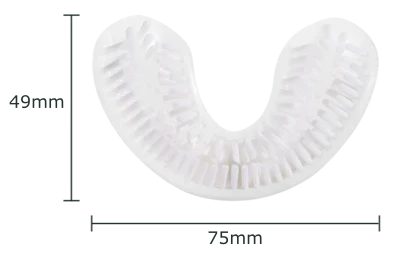
Adult small brush heads

Brush head measures 49mm from front to back and 75mm across at the widest point.

measurements for adult regular brush heads

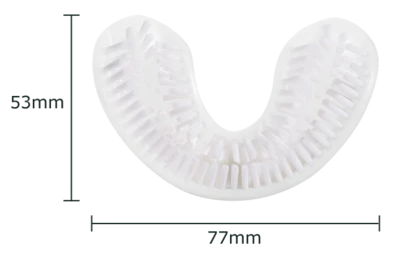
Adult regular brush heads

Brush head measures 53mm from front to back and 77mm across at the widest point.

measurements for adult regular brush heads

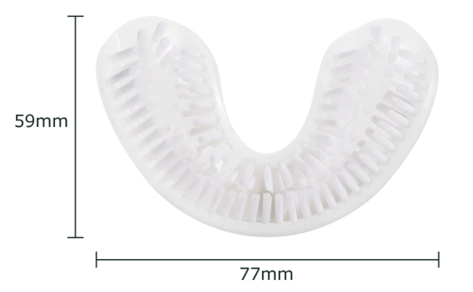
Adult XL brush heads

Brush head measures 59mm from front to back and 77mm across at the widest point.

measurements for adult XL brush heads

Still unsure? We’re happy to help!

Our team is here to answer all your questions on sizing or product features. Just contact us at customercare@autobrush.com

Fluoride vs Nano-HAp

What is the difference between Fluoride and Nano-HAp?

Fluoride and Nano-Hydroxyapatite (Nano-HAp) both enhance dental health effectively. Fluoride is renowned for its ability to strengthen tooth enamel and prevent cavities. Nano-HAp offers a similar benefit as a fluoride-free alternative, perfect for those who prefer it, and is especially safe for children who might swallow toothpaste.

Learn more about Fluoride and Nano-HAp in our blog.

My Account

Reset your password

We will send you an email to reset your password

Cancel

Welcome Back!

Log into your account to:

  • Checkout faster
  • View your order history
  • Manage AutoShip orders
  • Access order status

My Account

Create account

Creating an account makes it easier to:

Hand holding a pink automatic toothbrush passing it to another hand, for AutoBrush

Invention of the Toothbrush

  1. 3000 BC
  2. 1498
  3. 1690
  4. 1857
  5. 1938
  6. Present


Generally speaking, any “device” that is used to clean a person’s teeth is a toothbrush. Toothbrush has been around for a long time, no matter the form or the name. 


Now, let’s go back to history where it all began and how it is now.


3000 BC


The earliest form of toothbrush have been in existence as early as the Ancient Civilizations. They used a “chew stick” which was a thin twig with a tattered end. These “chew sticks” were rubbed against the teeth.


1498


Bristle toothbrush was not invented until 1498 in China. They are similar to the type we are using today, but they used the thick, coarse hair taken from the back of a hog’s neck as the bristles and bones or bamboos as handles.


Wall bridge across the mountains, for AutoBrush


1690


The first recorded use of the actual word “toothbrush” was in 1690 as written by a man named Anthony Wood in his autobiography. It may actually be true that people have been using the word “toothbrush” way before that but this was just the first time that we see the actual word.


1857


The first U.S patent for toothbrushes was granted to H.N. Wadsworth. Mass-produced toothbrushes becomes a norm around 1885.


1938


The first nylon bristles were introduced by Dupont de Nemours. It was only a matter of time before these nylon bristles made their way to the toothbrush industry. Nylon has become an instant hit because people would rather use these softer bristles over animal hairs.


Two wooden toothbrushes placed in a jar with white tiles background, for AutoBrush


Present


Now we fast forward to today. Nylon bristle toothbrushes are still the most popular kind that are being used world wide. From hard, medium, soft to extra soft bristles. In addition to that, we now have toothbrushes that comes in different shapes,  automatic toothbrushes and mouthpiece toothbrushes.


Boy holding mouthpiece brush with cat design, for AutoBrush


Back to blog

Leave a comment