



Your gums are talking to your heart (and your doctor should be listening)
By Dr. James Younan, Public Health General Dentist
Chief Dental Officer at Autobrush
Here’s something that still blows my mind:
Your gums are basically a report card for what’s happening in the rest of your body.
When I see someone with inflamed, bleeding gums, I’m not just seeing a dental problem. I’m often seeing a red flag for heart disease, diabetes, or even cognitive decline years down the road.
That’s not dramatic. That’s medicine.
And here’s what I wish everyone understood about gum disease.
Gum disease doesn’t stay in your mouth
Think of your gums like the grout between bathroom tiles.
When that grout gets infected and starts breaking down, water seeps behind the tiles and causes damage you can’t see. Rotting the walls, creating mold, compromising the entire structure.
That’s exactly what happens with gum disease.
When bacteria infect your gums, they create inflammation. But that inflammation doesn’t stay local. Those bacteria and inflammatory chemicals enter your bloodstream every time you chew, brush, or even swallow.
Now your heart, brain, pancreas, and immune system have to deal with that constant low-grade invasion.
Research shows:
- People with gum disease are nearly twice as likely to develop heart disease
- Gum disease makes blood sugar harder to control in people with diabetes
- Chronic inflammation is being studied for its role in cognitive decline
It becomes a vicious cycle.
Inflammation feeds disease. Disease feeds inflammation.
And your gums are right in the middle of it.
The good news (if you catch it early)
If we catch gum disease early, at the gingivitis stage, it’s completely reversible.
Gingivitis is simply inflammation of the gums. You’ll see:
- Bleeding when brushing or flossing
- Redness
- Swelling
At this stage, a professional cleaning and improved home care can restore your gums to health.
But if you ignore bleeding gums and allow the infection to progress to periodontal disease, the damage becomes permanent.
And this is where things change.
Once bone and tissue are lost, we can’t regenerate them naturally. At that point, you move into periodontal maintenance every 3-4 months because that’s how long it takes for harmful bacteria to repopulate and start causing damage again.
Think of it this way:
- Gingivitis is the yellow warning light on your dashboard.
- Periodontal disease is engine failure.
One is reversible. The other is lifelong management.
Improved home care is where most people fall short.
It’s not because they don’t care.
It’s because consistency and technique matter more than most realize.
Effective gum care requires two things:
- Mechanical disruption of bacteria along the gumline
- Consistent daily repetition
This is one reason I’m intentional about the tools I recommend.
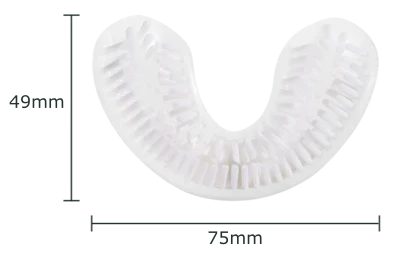
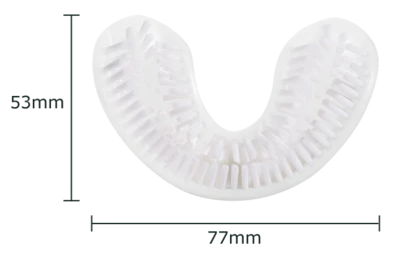
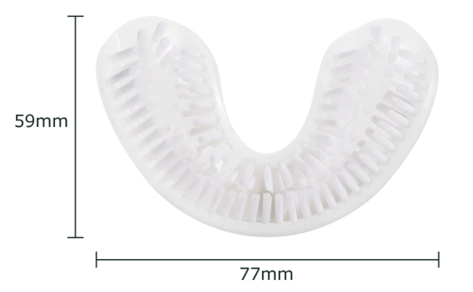
Autobrush was designed with GumDefend™ bristles, an additional row of soft silicone bristles positioned to gently stimulate along the gumline when used with the proper brushing motion. Combined with its full-arch nylon bristle coverage, it helps deliver consistent, even contact across the teeth and gum margin in a controlled 30-second cycle.
In clinical testing, Autobrush demonstrated up to 45% greater gingivitis reduction compared to a manual toothbrush over four weeks.
Here’s my challenge to you
For the next two weeks:
Floss every single day. At night. No skipping.
If you do it correctly, your gums should stop bleeding within 7-10 days.
If they don’t?
Call your dentist.
Not in six months. Now.
Because inflammed gums are not “normal.” They are a sign your immune system is fighting infection.
Taking care of your gums isn’t just about keeping your teeth.
It’s about protecting your heart.
Your brain.
Your blood sugar.
Your longevity.
As Chief Dental Officer at Autobrush, I care deeply about giving patients tools that make consistency achievable.
Autobrush has been clinically tested and shown to reduce gingivitis by up to 45% more than a manual toothbrush over four weeks. Its GumDefend™ bristles are designed to support circulation along the gumline, where inflammation begins.
Because gum health isn’t cosmetic.


